Cloud vs. Local Backup: The HIPAA Reality for NJ Medical Practices
Is your NJ medical practice's data truly HIPAA compliant? Learn the critical differences between cloud and local backups and why you likely need both.
By Pclinkup Team
3 min read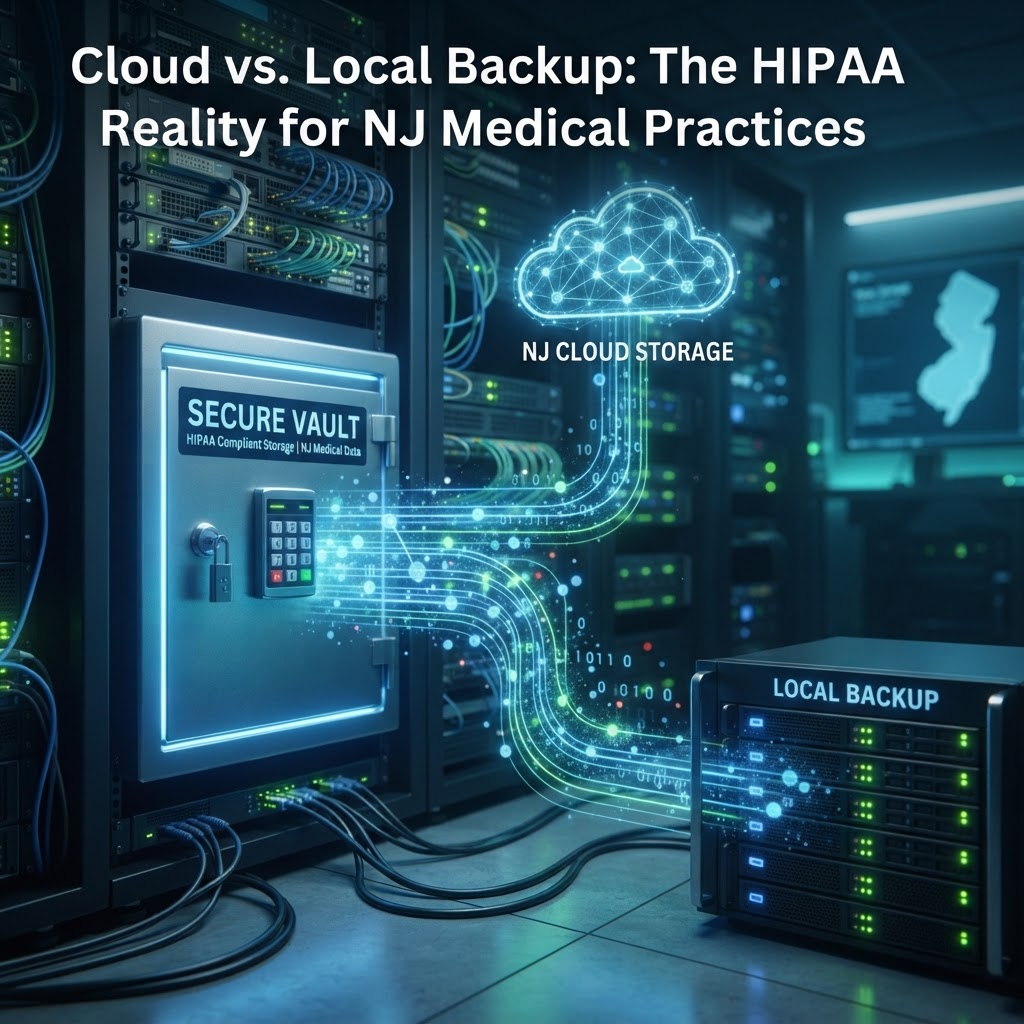
The HIPAA Backup Requirement: What You Actually Need to Know
Many NJ medical practice owners operate under the assumption that having a local server backup satisfies HIPAA requirements. In reality, HIPAA isn't prescriptive about the technology itself; it is prescriptive about the outcome. You are required to have a contingency plan that includes a data backup plan, a disaster recovery plan, and an emergency mode operation plan. More importantly, you must be able to restore patient health information (PHI) regardless of the disaster—whether that’s a local power outage, a ransomware attack, or a physical office incident like a flood or fire.
Why Local-Only Backup Is a Liability
Storing backups solely on-site, such as on a NAS (Network Attached Storage) device in your office, is a significant risk. If your office experiences a physical event—like water damage, fire, or theft—your local backup may be destroyed right alongside your primary server. Even for ransomware, if your local backup device remains connected to the network, modern malware is designed to encrypt those backups as well. Relying solely on local backups leaves your practice vulnerable to total data loss, which directly violates the HIPAA mandate to ensure data availability.
The Case for Cloud Backup (and Encryption)
Cloud backup provides the geographical redundancy that local storage cannot. By offloading data to an encrypted cloud environment, your PHI remains safe from local physical threats. However, moving to the cloud introduces new responsibilities. HIPAA requires that you enter into a Business Associate Agreement (BAA) with your cloud provider, confirming they adhere to HIPAA standards. Furthermore, all PHI must be encrypted both in transit (while moving to the cloud) and at rest (while sitting on their servers). Without an executed BAA and proper encryption, you are non-compliant.
The Hybrid Approach: The Gold Standard for Compliance
For most NJ medical practices, the best approach is a hybrid solution. This involves maintaining a fast, local backup for quick daily restores in case of minor file corruption, while simultaneously replicating that data to a secure, HIPAA-compliant cloud. This setup offers the best of both worlds: immediate accessibility for minor issues and a robust fail-safe in the event of a catastrophic disaster. This dual-layer strategy is widely regarded as the most effective method for meeting HIPAA’s stringent data availability and disaster recovery requirements.
Moving Forward With Confidence
Compliance isn’t just about having the right software; it’s about having a tested strategy that works when you need it most. If you are unsure whether your current backup solution meets HIPAA requirements, don't wait for an audit or a disaster to find out. Contact Pclinkup today for a free IT assessment. We specialize in helping New Jersey medical practices secure their data and achieve full compliance.
Explore Our Related Services
Need Expert IT Help?
Our team is ready to help your business stay secure and productive.